

This is a guest post from B.B. Inglis. He is a pastor and writer from Peterborough, Ontario, Canada, and writes semi-regularly for a column at Dominion Press. This reflection on Milton and Pan, even though it is not Advent season, is a treat.
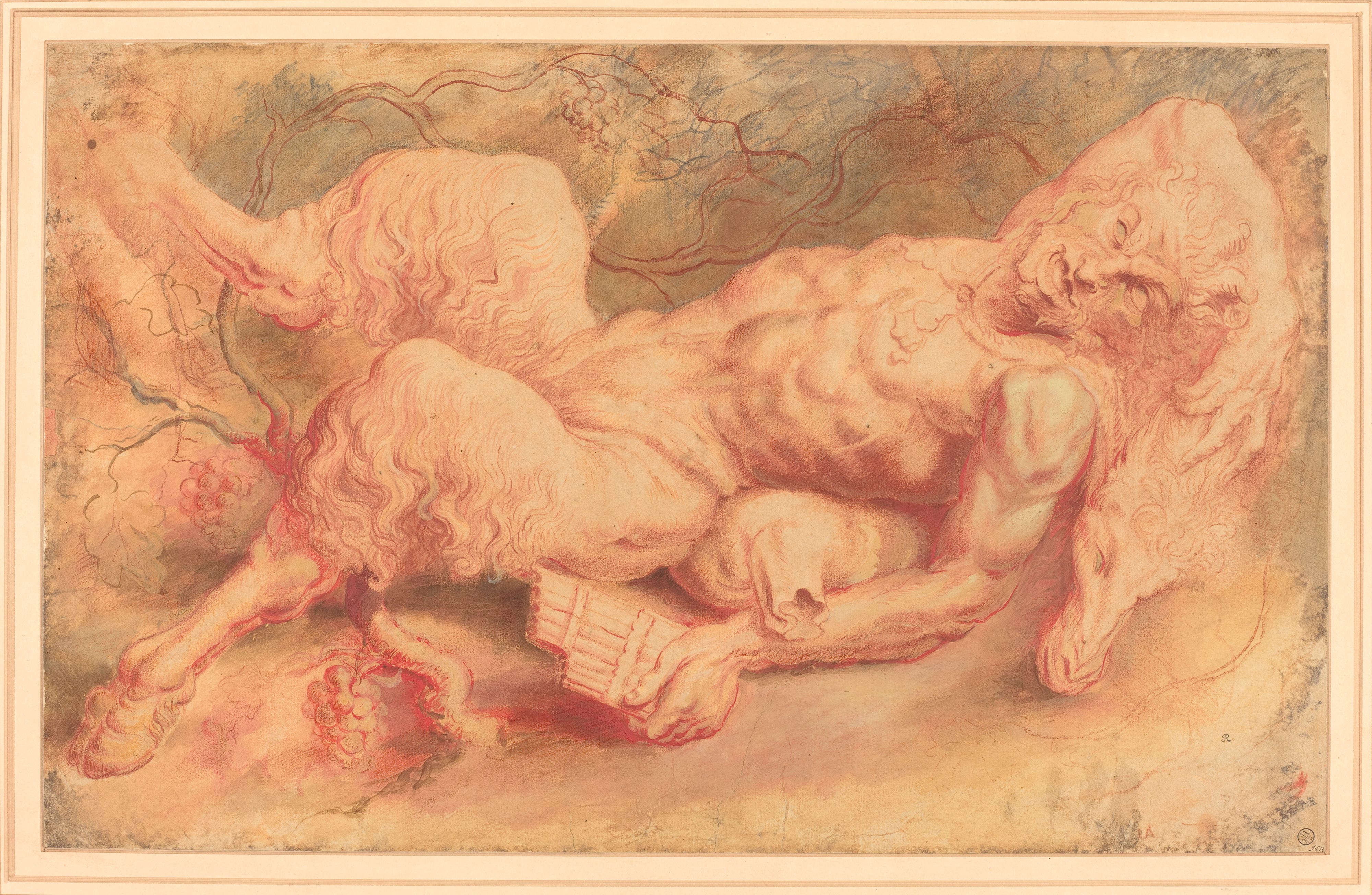
This past Christmas, I had my Grade 7/8 class memorize John Milton’s On the Morning of Christ’s Nativity. At thirty-one stanzas, it’s an imposing specimen — not just in terms of its length, but its theme as well. Gone are the eerily reverent livestock and gauzy backlit manger. The pillowy angels and feeble triad of wise men are off haunting the front yard of a Unitarian church somewhere. Instead, from “the dreaded Infant’s hand,” we observe a blood-slicked sword. A legion of old gods — Osiris, Ashtaroth, Ba’al, Typhon — lay hacked into ribbons at his feet.
It’s the incarnation, only reimagined by Quentin Tarantino.
Despite the culling of gods in the poem’s second half, Milton extends unexpected amnesty to the “mighty Pan.” But it shouldn’t surprise us. Although Milton is a Christian, he is also a classicist. Ed Simon, writing for the Paris Review, even goes so far as to note a “regretful twinge” throughout Milton’s poem, as “anti-pagan iconoclasm always threatens to morph into more complete atheism.” Men like Lewis and Tolkien would agree, viewing the opus of ancient myth and legend as misguided, but sincere graspings after the “true myth” of Christ. Such men could view even history’s bleakest religious seasons as a veritable orchard of analogy.
In this, I believe Milton can shepherd both modern Christians (benumbed as we are by materialism) as well as pagans, back home again.
King of sheep, friend of sinners
It’s no surprise that in our own skeptical age, many are turning to paganism for consolation. As of October 2025, #WitchTok had racked up nearly ten million posts. Many parts of Europe are seeing an explosion of interest in various reconstructions of pre-Christian Germanic religion. Perhaps they imagine those virile, red-blooded gods — those gods with horns and hammers — will assist them in battle against the ravages of disenchantment. In light of such desperation, well might we lament with Beowulf’s author, “These were hard times, heart-breaking … Sometimes at pagan shrines they vowed offering to idols, swore oaths that the killer of souls might come to their aid and save the people. That was their way, their heathenish hope; deep in their hearts they remembered hell.”
As Christians, although we may affirm certain ontological aspects of paganism (i.e., the world is certainly more than the physical stuff around us), we must also insist on its insufficiency as a door. As an analogy, however, we would be far from the first to view myth as a stepping stone to truth.
Indeed, as Milton himself does:
The shepherds on the lawn,
Or ere the point of dawn,
Sate simply chatting in a rustic row;
Full little thought they than
That the mighty Pan
Was kindly come to live with them below:
Perhaps their loves, or else their sheep,
Was all that did their silly thoughts so busy keep;
For those unfamiliar with Pan, he was among the more rustic contingent of Greek deities. A wild, unpredictable figure, some of his more notable features include being half-man, half-goat, lord of lonely places, friend (or foe) of shepherds, and a lover of wine and women. Those wandering the wilds might suddenly find themselves stricken with unspeakable “PANic” (the root of our modern word) or paralyzing anxiety at the sound of his reed panpipes. Many a nymph, and the odd unfortunate ewe, found themselves the object of his lecherous advances.
Pan’s *ahem* earthy appetites made him a popular choice among the labouring class, for whom such pleasures made the toil of subsistence living endurable. Whereas many of the gods were viewed as too occupied with global happenings to care about the liver fluke afflicting their flock, Pan was a firmly parochial god. In him, the common man could find a refuge divine enough to offer solace, and yet human enough not to inspire shame.
At the hands of the Romans, the entity of Pan received something of a domestication and became known as “Faunus” or “Innis.” It was this less-savage iteration that would be taken up by various Edwardian authors such as Kenneth Graham, J.M. Barrie, and Eleanor Farjeon. In Pan, they discerned an atavism that could help them brace against the devastation of industrialization and the loss of their bucolic countryside.
There was a problem, however. Pan had died some 2000 years earlier.
According to Plutarch, an Egyptian sailor named Thamus was once sailing to Italy. As he passed by the Greek islands, he heard a divine voice call to him by name and told him, upon returning home, to announce that the great god Pan was dead. When he did, “a great cry of lamentation was heard, not from one person but from many, mixed with exclamations of astonishment . . . Tiberius was so convinced of the truth of the story that he ordered inquiries and investigations into Pan, and the scholars, numerous in his court, speculated that Pan was the son born of Hermes and Penelope.” (Plutarch, On the Decline of Oracles, 17)
The story of the death of Pan was seen as significant by certain Church Fathers, including Eusebius, who routinely mocked the pagan gods and made the connection that since “Pan” was Greek for “all,” the death of Pan represented the death of the entire pagan structure. Interestingly, Pan’s death occurred during the reign of Tiberius, who would have been emperor around the same time as Christ was born. Chesterton notes, “It is said truly in a sense that Pan died because Christ was born. It is almost as true in another sense that men knew that Christ was born because Pan was already dead. A void was made by the vanishing world of the whole mythology of mankind, which would have asphyxiated like a vacuum if it had not been filled with theology.”
If history proves anything, it’s that mankind was made to worship. If not the stars, then the sun. If not the sun, then the stones. What Chesterton is saying is that man cannot arrive at the totality of meaning within himself, nor in the works of his own hands. The state has tried. Silicon Valley has tried. Modern education has tried. And yet for all these efforts to suppress the divine hunger — or at least to keep it respectable — it keeps blowing out in embarrassing caricatures: Thor, Anubis, Pan.
Prepare ye the way
Pan is not enough. He was never enough. He was, at best, a tutor. A foreshepherd, announcing the Greater Shepherd to come. Did Pan die? Or did he simply blow away in the wind, as chaff when it is no longer needed?
One recalls Ratty and Mole, mired in their own helpless moment, suddenly confronted by the nearness of “some August presence.” Who? Some dark and bloodthirsty god? No. Instead, a shepherd. “Helper and healer, I cheer — Small waifs in the woodland wet — Strays I find in it, wounds I bind in it —”
In Christ, a true and better Shepherd had arrived. Not half-goat, half-man, nor even half-god, half-man, but arrayed in glorious Nicean unity, “God from God, Light from Light, true God from true God.” As God, he is eternal, able to bear eternal wrath. As man, he is imminent, able to make atonement for sin and aid those who are tempted. One who inhabited glory, and yet gladly laid it all aside to “kindly live with them below.” One who dwells in approachable light and yet is not ashamed to call us brothers.
In the moment the angels arrived, the shepherds found they had no room for silly thoughts. Indeed, they found they were not just shepherds at all. They were worshippers. Faced with the aching potency of the divine, they had been mercifully wrenched from their prosaic chatter. Perhaps their first impulse was towards shame — to hide their beer cans and spray Febreeze on their weed-smelling clothes. But then they realize it isn’t about them. They are mere recipients of an eternal, blazing hymn, “Glory to God in highest heaven, and peace on earth to those with whom God is pleased.”
In the West, we face something of our own moment of asphyxiation. For what is materialism but a yawning void of nothingness; an agent of deconstruction we nevertheless keep trying to build on. As Christians, as wielders of the “true myth,” we must do better. In the midst of identity politics, globalist technocracies, sterile utopias, threadbare tribalism, and doomed pacts with dead gods, may God help us to “Build it again, O ye bards, Fairer than before!”
