

The scene replayed in my mind over and over. For weeks. Maybe months. Each time, I tried to force the memory away, but like “don’t think of a pink elephant,” my mind rebelled. The scene kept me awake on some nights far past my bedtime.
I was 10 years old, and the scene was from the movie Superman 3. During the climax, a supercomputer created by the villains drags a fleeing woman back into its guts and transforms her into a cyborg slave.
It didn’t matter whether she was one of the bad guys. It was terrifying. The scene is still disturbing, despite its camp. Perhaps because the actress gives a convincing performance of having her autonomy and consciousness stripped away, struggling, frightened, desperate, then going silent. I can understand my 10-year-old being terrified.
However, did my living nightmares stop me from watching Superman 3 again, multiple times? Of course not. I loved all the Superman movies, including the 3rd. I couldn’t look away.
Most people have their own scenes from movies that traumatized them as children. Many of them overlap. In the 90s, it was almost a meme to say that The Neverending Story destroyed our innocence when we all witnessed Atreyu lose his horse, Artax, in the swamp.
What makes a movie traumatizing to a child? Why do some scenes cause nightmares that we remember long after we’ve outgrown them?
Made For Children
A commonality of these traumatizing scenes is that they are in movies ostensibly made for children, or at least family-friendly. No one ever cites a scene from The Exorcist as something that traumatized them as a child, because almost no one watches The Exorcist as a child. People see that movie for the first time after they have some years under their belt, unless they had terrible parents or were at the wrong sleepover.
Who Framed Roger Rabbit is another example. Remember, I said ostensibly made for children, because many parents were bamboozled by this Chinatown remake dressed in cartoon drag. Micky Mouse! Bugs Bunny! Sultry noir seductresses! Unexpected deaths of cute immortals! Wait, what?
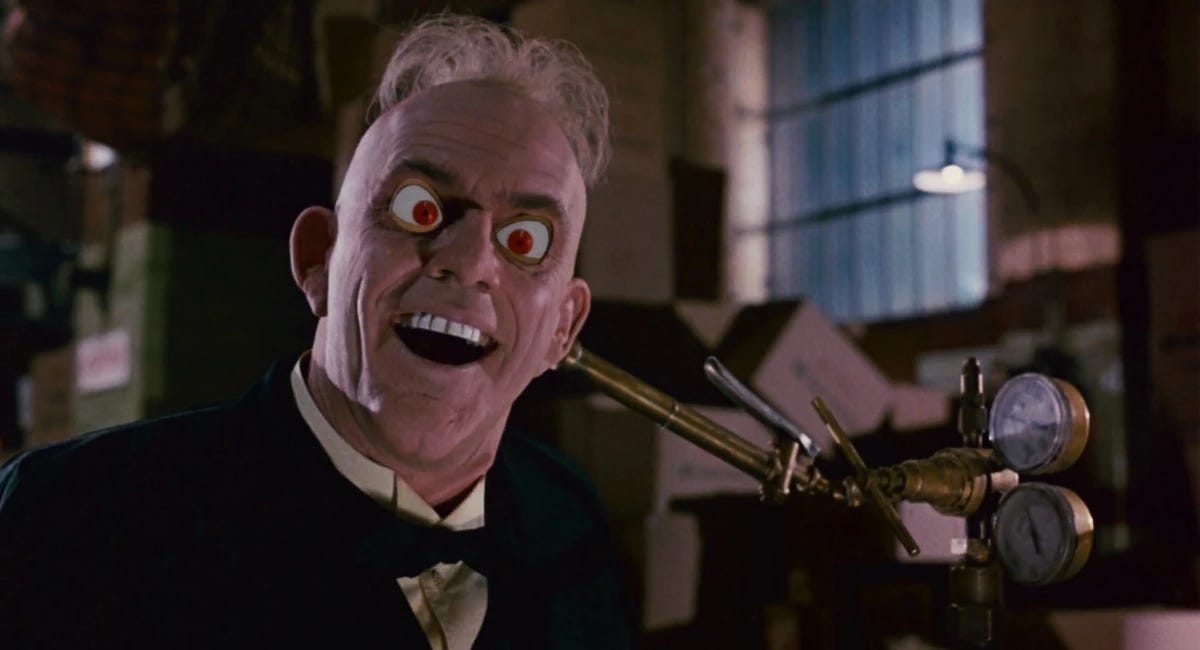
I watched this movie way too young, as did many others. Christopher Lloyd getting crushed and then having crazy cartoon eyes is a common scene brought up as traumatizing.
Minimum Level of Quality Required
While no one could confuse Superman 3 with a good movie, it was good enough to draw in a willing audience. It had an understandable story and plot, and it had Superman. “You’ll believe a man can fly” was the tagline for the very first Superman movie, and it was still true for the third film.
For a scene to be traumatic, it has to be wrapped in a movie that has coaxed its young audience to fully accept its world and premise. Most children watching it will buy into that world. They are immersed, and while they are still sitting in their living room, their imaginations might as well be dancing in another reality. Their bodies are leaning forward, and their ears tune everything else out.
A scene can be scary and horrifying and gruesome and graphic, at least on paper, but if it is not in a movie that arrests attention, that scene will not be traumatic. It will slide off their inattentive retinas and bounce harmlessly to the floor, or it will cause a chuckle, or maybe a shrug of confusion. A child who invests nothing into a movie will not be traumatized by that movie.
The Unexpected
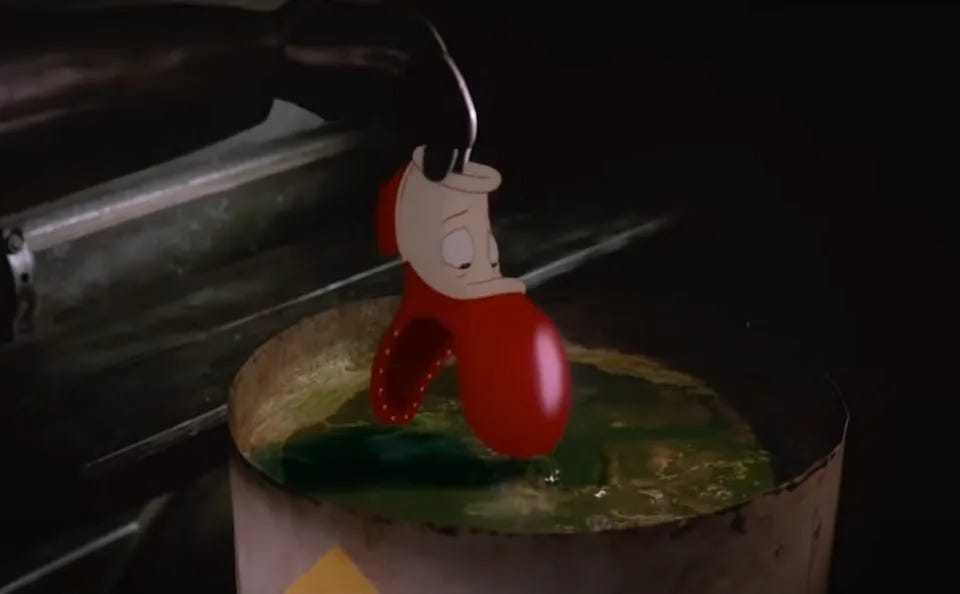
Most of these traumatizing scenes are often unexpected, and the tone of the film has lured the audience into a false sense of comfort. One moment, you’re watching zany hijinks, and the next, something cute and cuddly is meeting a horrifying end, one you had never even imagined was possible. Like in Who Framed Roger Rabbit, when the shoe gets dissolved.
Or in Return to Oz, when suddenly the viewer is confronted with a hallway of heads that a witch chooses each day, like choosing which shirt to wear. Then they all turn and start screaming at Dorothy. The movie was already a bit macabre, but nothing prepares you for the sudden crank-up to 11.
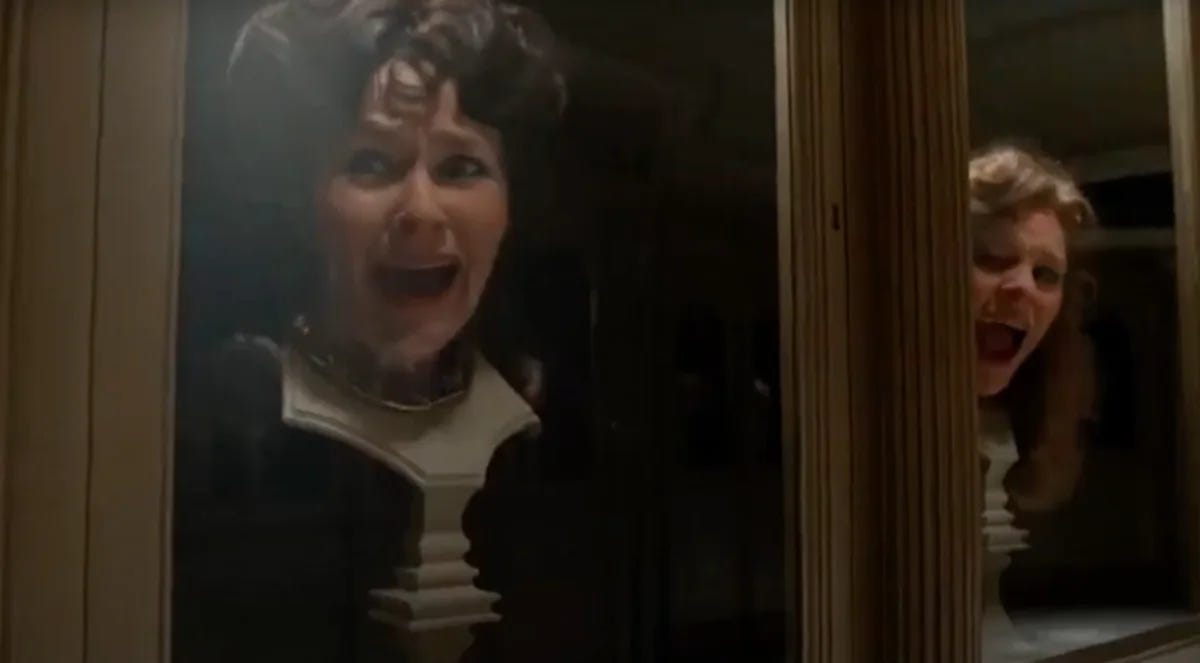
There’s nothing even close to this scene in the original Wizard of Oz movie, which would be the main reference point for most viewers.
Relatable On a Visceral Level, or Easy to Understand
A child can relate to losing a friend or a pet, so Atreyu losing his horse hits hard. Being trapped in a small space, unable to move, and subject to the will of a stronger personality, like the villain in Superman 3, is something any child can imagine. Swapping heads is not exactly relatable, but easy to understand, and immediately understood as wrong and horrifying. Mufasa’s death in The Lion King is one some people cite, and the deep sadness of losing a parent is easy to imagine for many children.
What is the Correct Balance?
Plenty of movies and scenes frighten children or make them sad without inducing nightmares. I would argue that it’s necessary for at least some stories to be frightening, because the world is frightening at times. Paraphrasing Chesterton, children already know dragons exist. What they need to learn is that dragons can be defeated. For that lesson to land, the dragons need to be, at some level, threatening.
But there’s a difference between a fright that has the child snuggle up closer to the parent, and one that paralyzes them and leaves them sleepless for nights on end. There’s a difference between jumping off the couch and jumping off the roof.
Every child is different. Some are more sensitive. Traumatizing scenes for some are just a blip for others. Some kids will laugh at the scene in Jurassic Park when the T-rex eats the guy off the toilet. Some kids (like me) get deeply disturbed when E.T. turns all white and sickly and the family home gets turned into a quarantined hospital ward.
Know your child. Know the movies they are watching. Don’t shrug off scenes just because they are silly to you, a grown adult. It’s okay to wade in the shallow end for a while until you figure some things out.
And if you suspect something affected your child in a deeper way than expected, don’t let them wallow in nightmare fuel all alone. Talk to them about it. Unmask the magic of the movie by explaining special effects. Maybe show them some behind-the-scenes footage that demystifies the horror or makes it goofy.
What other movies did I miss? Have your children been traumatized by anything more modern?
When Jumanji first came out my children were 4, 6 and 8. We borrowed the book from the library and loved it. Then we started hearing the reports of how young children were being terrified by it at theatres. Then, the worst.... my oldest saw it at a friend's house and so we borrowed it from her and all watched it together. We laughed so hard that when their dad arrived home from work just after it ended we rewound it and watched it again. My conclusion? Children need their parents to watch movies with them and they need to TALK during the movie, even turning it off to explain what's going on if necessary. WE are responsible for what they learn and how they learn it, and though I did a far from perfect job at raising my children (who are now 36, 38 and 40...) I think I can say with certainty no movies ever traumatized them, especially considering NO movie was ever allowed to take itself seriously.
(Re: below: I also had to leave during the “flying monkeys” scene of the ORIGINAL “Wizard of Oz.”!)