

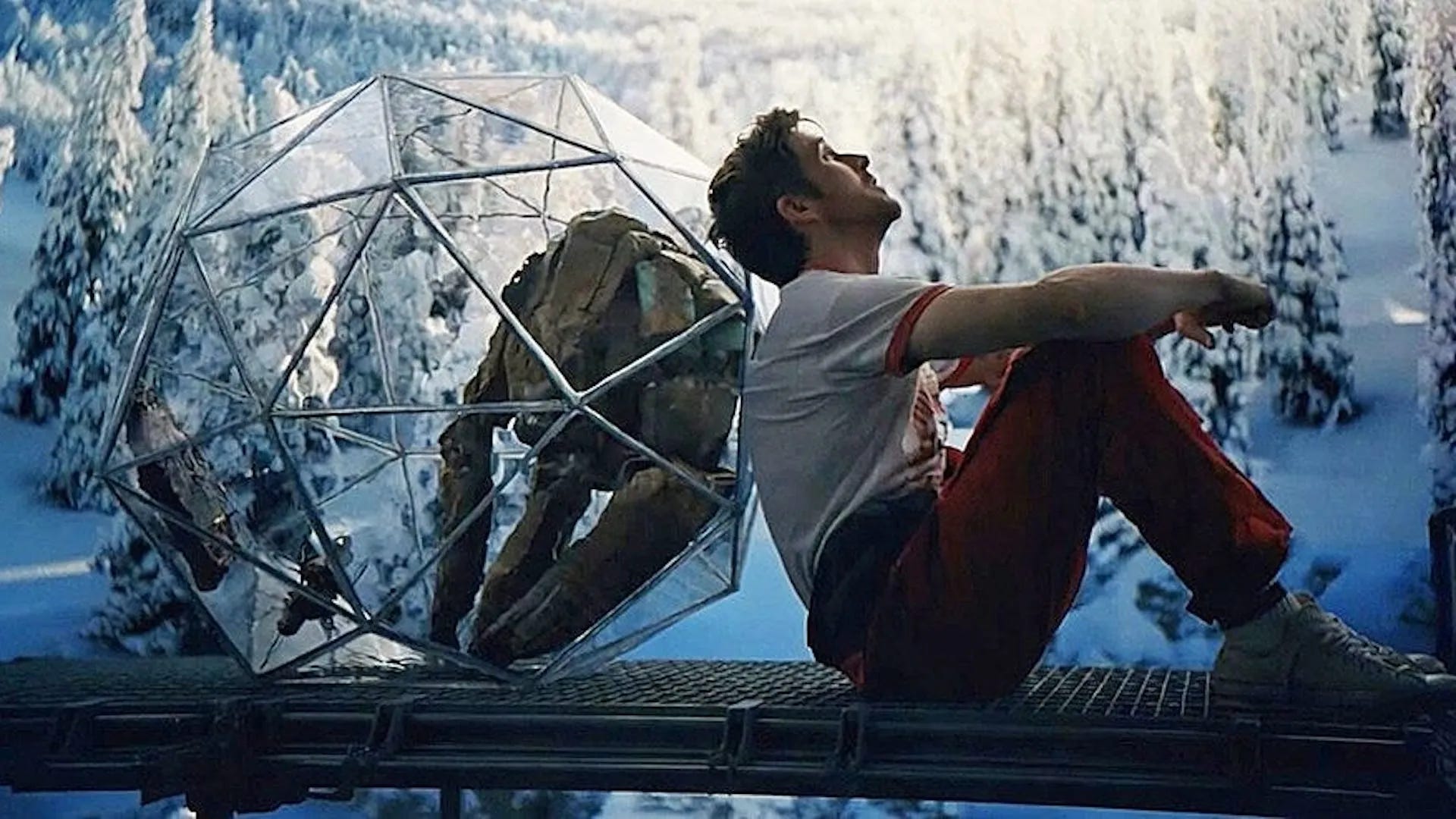
Project Hail Mary is a good movie, not a great one, partly because it is a merely good adaptation of the book. I do not demand slovenly devotion to the source material because movies are a different art form than books. Allowances must be made. Often, true fidelity to the source material means cutting things out, rearranging key scenes, merging characters, and so on. Great movies can be made from mediocre source material as the filmmakers find the core of what works, polish it, and present it with a new shine and perspective (The Godfather or Jaws). A false sense of loyalty, however, forces a rigidity that breaks instead of bending and flowing with the needs of the medium.
One example is the first Harry Potter movie, which feels like a checklist in movie form. Sure, it’s faithful to the book, but it’s not a very good movie. Bland. Lifeless. By contrast, the third Harry Potter movie took some liberties, allowed an infusion of the director’s unique vision, and ended up being a good movie, still recognizably based on the Prisoner of Azkaban. It had a beating heart of its own, instead of trying to squeeze blood from the raw words on the page, helped by the fact that the child actors have better experience at their craft.
Project Hail Mary does an admirable job of having its own beating heart. It takes liberties. It modifies the story to successfully translate a first-person narrative into something that works for cinema, and without resorting to voice-over. It even manages to be more family-friendly than the book, cutting out gratuitous cursing and sexual references. I applaud the deft touch of bleach.
The performances are great. Rocky the alien is well-done. Most of the story and critical moments are intact.
However, it makes a critical error by removing a load-bearing narrative point, one that is important for the main character’s arc. Without it, our protagonist doesn’t actually grow all that much. Without it, the spirit of the narrative is diminished. The essence has changed. There are particular details and scenes in a book that, if left out, the whole thing becomes a completely different story, or a character becomes a different person entirely.
If you cook the shrimp, it is no longer ceviche. You can ask for steak tartare well-done, but then it isn’t steak tartare.
To go back to our Harry Potter examples, the sixth movie, Half-blood Prince, commits such an act of vandalism.
In the book, Dumbledore paralyzes Harry, so the boy cannot intervene in the scene that comes next. The headmaster knows that Harry is the type of person to expose himself to help others, even if it’s the unwise thing to do, even if Dumbledore has told him not to interfere. So Snape kills Dumbledore, and there’s nothing Harry can do about it.
In the movie, Harry is not paralyzed at all. He stands by and watches while the whole scene unfolds. This makes Harry a fundamentally different character from the one in the books. The sixth movie also blunders in other ways with Harry’s character, so even though, on the surface, the plot and beats are very similar to the book, the story is marred.
Project Hail Mary makes a similar mistake. It omits vital information that makes the protagonist’s act of sacrifice not very sacrificial. The omission is more forgivable because Ryan Gosling is charming and Rocky is adorable and the movie has plenty of spectacle to patch over the flaw like thick paint over graffiti. But it could have been so much more.
All it would have taken was an extra minute or two.
Only One Obvious Choice
The ending of the movie plays out in the following way. (Spoilers, of course.)
Grace and Rocky, our main characters, have departed, saying goodbye, each starting the long journey back to their respective planets with the solution to their dying suns.
But something goes wrong. Grace realizes that the solution they have discovered and cultivated, the amoebas that eat the astrophage, can pass through xenonite. He manages to stop the spread in his ship so they don’t reach his engines and destroy his fuel (which is astrophage), because his ship is mostly metal. Rocky’s ship, however, is all xenonite. The amoebas will crawl right through and consume his fuel. Rocky is probably stranded right now.
So Grace has a choice. He can continue his journey to Earth. Or, he can send the fix for the sun on probes to Earth, then turn around and help Rocky. Grace can then bring the amoebas and Rocky to Rocky’s planet in the Hail Mary.
Of course, Grace does the latter. He turns around to save his friend and his friend’s entire species. The movie ends with him living on Rocky’s planet, teaching baby aliens about relativity. It’s all very sweet and nice.
But there’s one problem with it. In the movie, when Grace chooses to save Rocky, he’s not sacrificing anything. We know that Grace was a coward, forced to go on this mission against his will. This choice should have been the redeeming moment that gave him a chance to not be a coward, to give up everything.
In the movie, Grace is returning to his only friend in the entire universe. He has no one back on earth. No family. His students would be old or dead by the time he got back. The only person he was close to, Eva Stratt, shanghaiied him to go on what was supposed to be a suicide mission.
Grace doesn’t give up anything to save Rocky, nor does he think he’s giving up anything, and nor should the audience. It’s the obvious choice.
And that makes the ending much weaker than it should have been.
However, in the book, Grace chooses to sacrifice everything.
Real Sacrifice Brings Real Gravitas
In the book, it’s well-established that Grace has a limited amount of food remaining because it was always intended to be a one-way trip. He has barely enough food to make it back to Earth, and most of it will be nutrition paste intended for people in long-term comas.
Rocky has plenty of extra food, but that doesn’t help Grace at all. Rocky’s food is poisonous to humans.
Before Grace discovers that the amoebas can pass through xenonite, he’s thinking of returning home and being hailed as a hero. Even more, he wants to look Eva Stratt in the eye and rub his success in her face. So there’s a clear emotional desire, one that’s understandable, and one that’s made clear, since we’re inside Grace’s head.
When he discovers the problem, he now has a real choice. If he turns around, he will run out of food before they can reach Rocky’s planet. Even if he can somehow survive before he reaches Rocky’s planet, he’ll starve soon after, because, while they could restock him with fuel to get back home, they still won’t have any edible food.
So when Grace turns the ship around to save Rocky, he is expecting to die. Full stop. He is not expecting any kind of “happily ever after.” He makes the conscious choice not to be a coward, to instead sacrifice everything. He gets a second chance to spend his life for a worthy cause, and this time, he takes it.
This realization changes everything and adds real weight to his final choice. The movie could have kept this weight with a few lines of dialogue and a slightly longer video log entry before he shoots off the probes.
Grace was going to die, and he was entering willingly into his death to save his friend.
Of course, the book also has a happy ending, but it’s not all sunshine and rainbows. They figure out the food problem, but Grace was malnourished on the trip to Rocky’s planet. What’s more, the intense gravity of the world has forced him to walk with a cane and has aged him prematurely. Even though Grace didn’t need to sacrifice his life, he still sacrificed something. To remain with his friend means more personal pain and a greater struggle. Yet, Grace is happy with the tradeoff. It was worth it.
And we love Grace all the more.
In an effort to create a cleaner, happier ending, the movie made a less impactful ending. The line between good and great is often very thin, and in this case, it was only a few lines of dialogue. A shame, because I wanted to love the movie. It had a chance at being a near-perfect adaptation.
Instead, I merely liked it, but it’s not something I’m desperate to experience again. Still a good accomplishment, but it could have been so much better.
If you like what I have to say, you’ll like this collection of fantasy and adventure short stories called Fire and Stone, which I curated. I also wrote one of the stories. Perfect for read-aloud time, or hand it to your 10-year-old.

I felt like the movie was a bit of a disappointment too and you nailed why it felt that way.
Another thing I was frustrated they left out was a line from Stratt after she drugs Grace to force him on the mission. I suppose the audience could infer it, but there's a bit of dialogue that is something like this:
Grace "you'll go to jail for this"
Stratt "I'll deal with the consequences, this is for the fate of humanity"
And when I read it it hit hard what a sacrifice that was. She was likely going to face tribunals and lose her freedom, but she was also going to be seen as a villain. I think being seen as a hero for your sacrifice is an understated motivation.
I didn't read the book. My understanding from the movie was that he was expecting to die by going to help Rocky.